
All posts by Ullhas Shirke

Movie Lover, FIlm Journalist

Fight of a common man against Violent ‘Yeda’

Yeda
Rating: ★★★
Banner: Maitra Entertainment
Producer: Satish More, Sneha Tambe, Girish Salvi, Laxman Salunkhe, Aditya Sharma
Director: Kishor Pandurang Belekar
Story – Screenplay: Kishor Pandurang Belekar
Dialogues: Girish Salwi
Cinematography: Raees Ansari
Cast: Ashutosh Rana, Reema Lagoo, Kishori Shahane, Satish Pulekar, Aniket Vishwasrao
Movie Review by: Ulhas Shirke

Director kishore Pandurang Belekar known for his debut Marathi horror film ‘Sa Sasucha’ and Asutosh Rana better known for his portrayal of dangerous characters in films like ‘Dushman’ and ‘Sanghrash’ have come together to offer new Marathi film ‘Yeda’, which is also debut film of Ashutosh Rana in Marathi. Therefore, this film had a special significance, knowing the capacity of these two people in their respective departments i.e. direction and acting. Moreover, the film having received ‘A’ certification of Censors, it was certainly expected to be horror filled film.

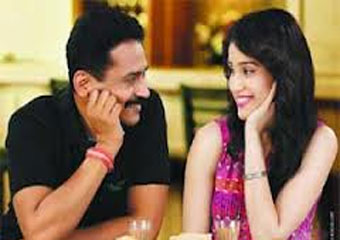
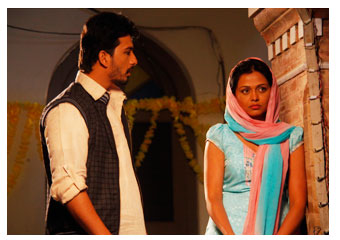
Set on the backdrop of a small town off Mumbai, the story of the film revolves around a psychic character of Appa Kulkarni ( Ashutosh Rana) who tortures his wife Savitri ( Kishori Shahane Vij) and wants his only young son Unmesh ( Aniket Vishwasrao), who is a Site Engineer, to marry a girl from wealthy family, so that he could recover all the expenses, he spent on his education. But, Unmesh who is in love with Pradnya( Pradnya Shastri) the only daughter of a postmaster from local Post office Mr. Vasant Narvekar( Satish Pulekar).

Knowing the dangerous nature of her husband, Savitri encourages her son to flee with Pradnya, suggesting him to take up another job at a new place. Pradnya gives a shock to her parents, as she flees with Unmesh, without taking them into confidence. Her mother Sadhana ( Reema Lagoo) feels more hurt. But, the psychic father of Unmesh doesn’t take this shock lightly. When Unmesh returns with his wife to seek the blessings of his kind hearted mother; Appa is almost on the verge of killing his own wife; who suggests her son to run away . Both manage to escape, as Appa follows them.

Ashutosh Rana

Appa is now after the blood of his own son and his daughter in law who is now pregnant. Violent Appa succeeds in his series of killings, targeting whoever comes in the way. Helpless Pradnya returns to her parents in that condition and finally delivers a baby boy; but breathes her last during delivery. The child is now in the custody of Vasant and Sadhana Narvekar; who are threatened by Appa to hand over the child. The entire post interval session is filled with mystery, as to what would be the next step of Appa and how Vasant Narvekar would face him. After face to face battle, Vasant escapes from the clutches of violent Appa in the climax, due to intervention of Police brought by his wife.

While he is overpowered by Police team, he warns Vasant that he would return soon to take back the child. And courageous Vasant dares to answer him back, stating that between him and his grandson, he would stand like a wall, to accept his challenge. In the climax scene, Vasant could have finished Appa in self defence; but it seems that the director had a sequel of this film in mind. The film which had held its grip over the screenplay for 130 minutes , therefore failed to satisfy the audience in the climax with an expected revenge, which was perhaps differed till part 2 of ‘Yeda’, as indicated through the concluding dialogue.

Technically, ‘Yeda’ is a well presented film by director Kishore Belekar , with good effective sound recording by Sanil P.K. and good support of location sound coming from Anil Nikam. Photography by Raees Ansari is very apt to the screenplay of this film. In the lead role Ashutosh Rana has really worked hard to present his dangerous character. He has received good support from versatile senior artistes like Satish Pulekatr, kishori Shahane and Reema Lagoo, who have performed equally well. In fact, it is a common man’s (Vasant Narvekar’s) courageous fight against violent ‘Yeda’ (Appa).

The young performers Aniket and Pradnya do not find much scope in this film; but, they have played their roles satisfactorily. Barring the violence part and not so convincing climax, ‘Yeda’ is otherwise a good creation.

Mrinal defines meaning of ‘love’ in her own style

Prem Mhanje Prem Mhanje Prem Asta
Rating: ★★★ ½
Banner: Bhupat Bodar Enterprises, Amol Production
Producer: Praveen Thakkar,
Director: Mrinal Kulkarni
Story: Mrinal Kulkarni
Screenplay: Manisha Korde
Cinematography: Amalendu Choudhary
Cast: Sachin Khedekar, Mrinal Kulkarni, Pallavi Joshi, Sunil Barve,
Suhas Joshi, Mohan Agashe, Smita Talvalkar, Neha Joshi, Vidyadhar Joshi, Sidharth Chandekar.
Movie Review by: Ulhas Shirke

A marriage ceremony is usually a happy event. It’s only the living together with understanding in the post marriage period, is all that important to make the couple happy. Today, we hear about rising number of divorce cases, taking place soon after marriage or sometimes even after spending over 10-15 years together. In some cases, it is just a mutual consent between the couple keeping friendly relations, after their divorce; just to keep their children happy. But, does that make the children really happy?

In some cases, either the wife or the husband is away pursuing their career. Among today’s young lovers even before marriage, there are a few break ups. The new trend especially among girls is to postpone the marriage; till they find a suitable match. Till then, live-in-relationship is preferred by them.

In comparison, the people of old generation, who try their best to keep such aggrieved couples together, consider themselves lucky to find their suitable partner and living with them with perfect understanding, throughout their life. But, how is it affecting the young generation, comprising of children? How are they looking at marriage? This is what actress turned director Mrinal Kulkarni has tried to show through her latest released film ‘Prem Mhanje Prem Mhanje Prem Asata’.

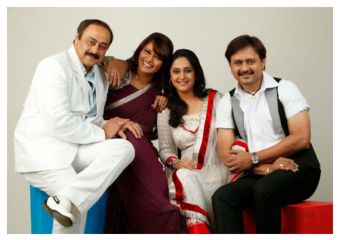
Dr.Rohit Phadnis (Sachin Khedekar) is a reputed Doctor in Pune, running his OPD in his own bungalow. His career oriented Astro-Physicist wife Pradnya (Pallavi Joshi) has preferred to migrate to USA after divorcing her husband, leaving him in the company of two children. Living in the same area is Anushree (Mrinal Kulkarni) with her mother-in-law (Suhas Joshi) and two daughters Piya and Ria. Her husband Kedar (Sunil Barve) has deserted her for the past four years. Yet, Anushree’s mother-in-law having a soft corner towards her daughter-in-law, prefers to live with her, taking good care of her grand-daughters; while Anushree is busy running her own florist’s shop.

Dr.Rohit’s and Anu’s children are studying in the same school. One day, while Piya is injured during her basketball match in the school, she is attended by Dr.Rohit. And that incident brings both Rohit and Anu together. While Dr. Rohit still maintains good relationship with his ex-wife, like a good friend, regularly communicating over phone; Anu doesn’t want to see the face of her husband, who has deserted her. But, Kedar is regularly in touch with his daughters over phone, especially his elder daughter Piya (Asmita Joglekar).

Pmpmpa Movie Still
At a time when Dr.Rohit and Anu come closer; Kedar returns back home to drop his mother and daughters from a ceremony and so does Pradnya at Rohit’s place , to attend her brother’s wedding. The relationship between Dr.Rohit and Anu reaches a stage, where both of them have to take a crucial decision. Rohit is firm on his decision and suggests Anu to take her own decision; suggesting that he would always welcome her in his life. In the climax scene, Writer-Director Mrinal takes her bold decision.

As a debutant Director, Mrinal does have certain limitations; but, her sensible script and a desire to send across a strong message with the help of realistic characters helps her to make her presence felt, both as an actress and a director. However, the screenplay by Manisha Korde could have been much more interesting to create the desired impact through few important situations present in the script. She has managed well to take that sudden twist during the interval ; but barring that she has not used the shifts during important sequences skillfully. The wedding ceremony of Pradnya’s brother, has been used just namesake. Similarly, the character of Kedar hasn’t been highlighted much, to indicate the reason for deserting Anu. It is only the fine performances from the artistes, makes you ignore such minor lapses in screenplay.

As a director, Mrinal shows her concern for children who are witness to such estranged relationship of their parents. She clearly shows it through their emotions. At the same time, she shows the sufferings of a woman who has been deserted by her whimsical husband. In that climax scene, she literally stands up to speak up for all such women, who helplessly welcome their husbands back home, in spite of being deserted by them for years. In the same scene, she questions, whether a husband would welcome his wife with the same fervor, when his wife returns back home after staying away for years, deserting her family?

At the same time, she also shows an elderly couple, living with perfect understanding through the characters of her parents played by Mohan Agashe and Smita Talwalkar. Last but not the least, she has presented her younger sister’s ( Neha Joshi) character so perfectly, showing the trend of break ups between young couples even before marriage. In short, she has tried her best to define ‘love’ and its relevance to marriage in her own style. And that really makes this film a worth watch for all age groups.

Excellent photography by Amalendu Choudhary, good music, meaningful lyrics, sensible dialogues and above all, the wonderful performances by all the artistes, gives an artistic touch to this thought provoking film.


Hansraj Jagtap – the talented teenager from Beed

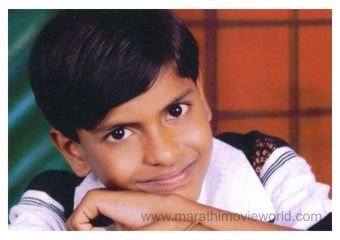
Hansraj Jagtap13 year old Hansraj Jagtap, a student of Champavati Vidyalaya, Beed was picked up during the auditions from among hundreds of children for the most important role of Krishna, in the award winning film ‘Dhag‘ directed by Shivaji Lotan Patil. The film also stars Usha Jadhav, who has bagged national award for best actress. She plays the mother of Hansraj in this film; while Upendra Limaye plays his poor father, whose house runs on the earnings of the last rites at the only crematorium in the small village of Maharashtra.

Even before the official release of his film ‘Dhag‘, Hansraj has bagged the Best child actor award at the recent ‘Ma Ta Sanman awards’; besides the film bagging six awards in different categories, including best film. Hansraj came into limelight, when his name was specially mentioned by the Jury while announcing the National awards. His performance has already been acclaimed by critics, while the film was screened at three different festivals during the past few months. The official release of his film will take place during the month of may 2013. Marathi Movie World spoke to Hansraj to congratulate him on his achievements. And the talented actor did speak at length about his experience after winning the award.

“I had just returned from Mumbai, after receiving the Ma Ta Sanman for best child actor in the film ‘Dhag’. The celebrations at home and school were going on; when I received another good news. I was at the school writing my exams . and when I returned home, my mother served me sweet dish ( Sheera) while father came home from his office with a box of Sweets (Pedhas). On TV news channels, they were talking only about the film ‘Dhag’ and other achievers at the national level. Finding my name in the ‘Special mention’ announced by Jury; was itself a big honour for me.” he reacted.

What next? And, he quickly responds, stating that he had just finished his 9th standard exams and was preparing himself to proceed to Kolhapur and Solapur during vacation, for the shooting of a new Marathi film ‘Kartavya‘. Hansraj has just been signed for this film, based on his performance in ‘Dhag’. It may be mentioned that the entire story of ‘Dhag’ revolves around his character of Krishna, who doesn’t want to carry forward his traditional family work at the crematorium. But, circumstances force him to do that work, during teenage. Luckily for Hansraj, he could find such a strong role on his debut in films.

If ‘Dhag‘ finds its entry for Oscars, being a path breaking film, with universal theme; Hansraj will go a long way. When Hansraj was asked about this possibility, he just wished for the same. Last year , after completing the shooting of ‘Dhag’, Hansraj was back to his routine at his native town, attending school and playing his favourite game of cricket with his friends. But, for the past one month; he is seriously thinking about his acting career. Now, next academic year being most crucial for him; accepting new roles in films simultaneously, will be like walking a tightrope. But, Hansraj likes to take up challenges. With his outstanding performance in film ‘Dhag’, he certainly stands tall in the field of acting.

Finally, when asked about the best Marathi film he watched in the recent past, he mentioned about ‘Jogwa’. His favourite cricketer is Sachin Tendulkar. The day is not far, when Sachin will sit next to him to watch his film. “I am grateful to the makers of this film, the director, assistant directors and all the artistes, for their motivation during the shooting of this film.” he concludes.

Marathi Movie World extends best wishes to Hansraj and sincerely hopes that he and ‘Dhag‘ both get nominations for Oscars.

‘Tuhya Dharma Koncha?’- focuses on dilemma of Tribals

Tuhya Dharma Koncha? Marathi Movie
Rating: ★★★ ½
Producer: Abhay Gadgil, Shrirang Godbole, Mohan Damle
Director: Satish Manwar
Music: Dattaprasad Ranade
Cinematography: Parixit Warrier
Cast: Upendra Limaye, Vibhavari Deshpande, Kishore Kadam, Suhas Palshikar,
Suhas Shirsat, Gauri Konge, Ramesh Medhekar, Shashank Shende
Movie Review by: Ulhas Shirke

God has no religion and therefore changing the God to offer prayers, does not change your religion. Latest released Marathi film ‘Tuhya Dharma Koncha?'(What is your religion?) tries to explain how poverty forces a poor family towards conversion to another religion and later goes on to show how the family has to face the ire from their own community. In fact, director Satish Manwar ( Gabhricha Paus fame) tries to explain the dilemma of tribals, who fall easy prey to opportunists and fanatics.

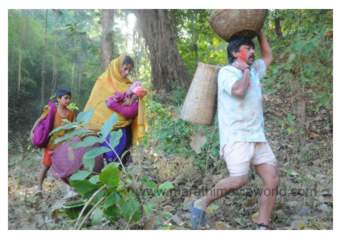
Set on the backdrop of a tiger sanctuary in Northern Maharashtra, the film revolves around a tribal family of Kavadu (Upendra Limaye) who lives in a small tribal colony with his wife Bhulabai (Vibhavari Deshpande) a small kid and a new born baby. One day, Kavadu is falsely implicated and put under trial for killing a tiger. In the absence of the bread earner in the family, Bhulabai becomes helpless when her new born baby needs immediate medical attention. She does visit the municipal dispensary at a nearby village; but can’t afford the costly food supplements prescribed. Later, when the child is seriously ill, on the suggestion of a lady from her tribe; she takes her son to a Father of a Christian missionary, who is a doctor. Indebted by the kind hearted Father and the Nun from the missionary, who offer her free treatment and food for her kid; Bhulabai regularly attends the mass at the church. She also gets converted into Christianity, only to face ire of local tribal community. Finally, Kavadu is declared innocent, as the real culprits are arrested. But, the a group of Hindu fanatics force Kavadu and few others from the village to get reconverted into Hinduism. Finally, Kavadu and his wife understand who their real God is, as they embrace a traditional tree in the last scene, to show their faith in Nature God.
Juhya Dharna Vibhavari Upendra

The film does deal with a sensitive issue with utmost care, without hurting the sentiments of any religion. When the Father of the church (Kishore Kadam) tells the Nun (Sneha Majgaonkar) that he was not interested in keeping the count of number of conversions; but, would be happy to find even one such true devotee of his religion; it makes his selfless service very clear. At the same time, a Hindu priest, who is spreading the importance of his religion and showing his opposition to conversions; is himself shown against violence. It is only few of his devotees, lock him up and get involved into violent activities. As a result of their aggression, the poor tribal community is in a dilemma. The director has also shown the Naxalite movement in this region; and the reason for their taking up the arms. But, in the film’s screenplay, the director has shown them neutral, in the religious uproar. There is one possibility that some of the portion must have undergone cuts at the Censor’s table.

Director Satish Manwar has however presented his subject in a realistic manner. He has used the ahirani language very well throughout the film, which is a tribute to Bahinabai Chaudhary, whose all original poems were in this language. Cinematography by Parixit Warrier is simply superb. So is the suitable music score by Dattaprasad Ranade and background score by Augustine Samuel and the wonderful flute played by Navin Iyer from South. In the role of Kavadu, Upendra Limaye has given one more fabulous performance after ‘Jogwa’. Vibhavari Deshpande has supported him well, as a helpless wife. She has expressed herself very well at every situation through her eyes. In the role of Father of the church, Kishore Kadam is at his best. The dialogues are apt to every situation. The film does throw light on the existing situation in tribal region and shows how the Government’s apathy, enables external forces to exploit their poverty.

Neela Damle – The Stylophone Queen

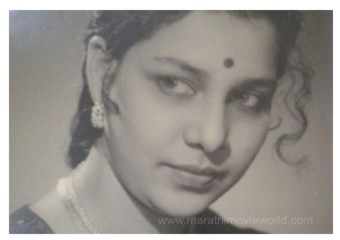
She is the daughter-in-law of late Vishnupant Damle, the founder of Prabhat Film Company, which produced India’s first talkie Film, ‘Sant Tukaram’. There was a time, when as a 19 year old, she had walked to the sets of Hrishikesh Mukherjee’s film ‘Anari’ along with Lalita Pawar, a family friend. Stunned by her beauty, Raj Kapoor on meeting her had suggested her to join films. Neela Damle, formerly Neela Kale was the daughter of yesteryear’s actor Late Madhav Kale, who was addressed as the most handsome hero of that period, by none other than Sitara Devi.

Neela DamleAs a child, Neela was brought up in a family, which had the background of acting and classical music. Her father Madhav Kale was a renowned actor during that period, having performed with some of the leading actresses of that time and her mother Sarla a music exponent, who managed an all woman orchestra during 30’s. So, music and acting was a gift to Neela.

She was also a good tennis player. However, she paid more attention on dance and music. As a teenager, she was well versed with classical music and performed ballet in Sachin Shankar’s group.

After her marriage to Vasantrao (Pandit) Damle, Neela shifted to Mumbai, as her husband was an Aeronautical Engineer with Air India. Post marriage, Neela focussed her attention on music and played musical instruments with an authority. She was also a TV star during that period. Once her husband gifted her an imported Stylophone, on which she practiced many popular film tunes. When she was given an opportunity by Kalyanji Bhai (Kalyanji-Anandji Duo) during his musical programme to play a small piece of music on his film ‘Nagin’, everybody including Anandji were stunned by her performance. Thereafter, Kalyanji Bhai addressed her as Stylophone Queen.

Today at 72, Neela Damle still plays that tune on her stylophone in guest appearance, at selected orchestras. “Now, it is not possible for me to perform at far off places; but if it is somewhere close to my house, I do oblige. The only annual ceremony I don’t miss is the Annual Ballet organised by Kumudini Lele (wife of Sachin Shankar). On this occasion, I get a chance to meet all old friends like Rekha and Chitra who were also disciples of Sachin Shankar.” she concluded.

It was a pleasure meeting this enthusiastic woman, who is still passionate about music. Best thing about her is that she keeps a low profile, in spite of her celebrity status. Marathi Movie World present her as a ‘star pick’ on the occasion of Women’s day.

‘Dhating Dhingana’ offers old wine in a new bottle

Dhating Dhingana Poster
Rating: ★★ ½
Studio: Aaditya Production
Producer: Aditya Dadhe
Director: Mandar Devasthali
Music: Ajay Atul
Cinematography: Sanjay Jadhav
Cast: Prasad Oak, Ankush Chowdhary Atul Parchure, Shweta Shinde, Aditi Sarandhar, Neelam Shirke, Anand Abhyankar, Arun Nalavade, Vandana Gupte, Smita Talwalkar, Uday Sabnis, Digamber Naik, Vidhyadhar Joshi, Suni Godse
Movie Review by: Ulhas Shirke

At a time when Marathi films are going for a change, with new subjects; some film makers still believe in following the traditional track of comedy, with nothing new to offer. There is no doubt that Feature films are a form of entertainment. But, the entertainment aspect should have such content which should keep the audience engaged from start to finish. Simply forming a big team of artistes and making them perform the scenes without the support of well presented screenplay, does not necessarily receive appreciation from the audience. Latest released film ‘Dhating Dhingana’ is one such film, which moves pointless; with foolish acts well suited to the title of the film; performed in rotation by different characters of the film.

Rahul( Ankush Choudhary) who is the most eligible bachelor, reads Superman Comic books and dreams of marrying a Girl, whose life is filled with adventures. His mother Snehal ( Vandana Gupte) wants him to marry her old friend Colonel’s (Late Anand Abhyankar’s) fashionable daughter Gauri( Aditi Saragdhar), who too is looking forward to marry a dashing young man.

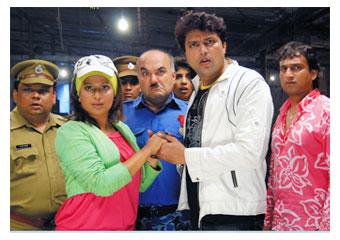
So, to make his mother happy, Rahul calls Gauri over phone and asks her to come dressed up in modern clothes at a temple campus; so as to enable both of them to identify each other in a thrilling manner. But, Rahul mistakes Nisha, a pick pocket; for Gauri and Gauri is mistaken to be his relative by Devaa( Prasad Oak), who comes to Pune from Alibaug for a job in a bank .At the same time, Inspector Rasal( Atul Parchure) and his lady assistant inspector ( Shweta Shinde) are on a mission to arrest a gangster( Uday Sabnis) , who is expected to visit a bank, to deposit the stolen diamonds in the Bank’s locker.

It is almost at the same time a gang of Five short men plan to rob the bank. So, we find all the characters assembled inside the ABC bank. The gang of short men dressed up like Schoolboys enter the bank and manage to steal the money at Gunpoint; while the Police Inspector and his assistant are on duty outside the bank. Nisha manages to capture the bag from the Gangster almost around the same time and she flees along with Devaa; while Rahul is left in the company of Gauri. But, the Gangster lays a trap as witnessed in the old Bollywood films. Finally, they all unite together at Alibaug with the help of Police, to stop the Gang of short men and the Lamboo gang led by a Gangster, from running away to Dubai.
Nilam Shirke Ankush Chaudhari

The film begins well, indicating that it would be a fantasy. But, as it progresses; the audience is subjected with foolish acts of different characters; which hardly make you laugh. Film literally drags till interval. The script is weak, especially in screenplay and dialogues. Mandar Deosthali’s direction is not impressive enough to create the desired humour, expected by sensible film lovers from him. Perhaps, the kids may enjoy some of the scenes.

The characters played by Vandana Gupte, Smita Talwalkar, Arun Nalawade, Vidyadhar Joshi, Savita Malpekar, Anand Abhyankar and Digambar Naik are just name sake in the film. The last two artistes are with their mask on, in the limited roles to their share. There were big expectations from Music directors Ajay Atul. But, there are just two songs; one of which is a Group performance, suited for title music at the end; but used at a wrong place.

The performances of Ankush Choudhary, Prasad Oak, Aditi Sarangdhar, Neelam Shirke, Atul Parchure and Shweta Shinde are satisfying; but, it gives an impression that they were performing on stage. Moreover, the film’s shooting seems to have taken place at least 3 to 4 years ago. The preparations for Commonwealth games in Pune is clearly noticed with proper upkeep of roads and the banners which are captured by Sanjay Jadhav’s neat and clean cinematography. Incidentally, Sanjay has also played a small cameo in this film. ‘Dhating Dhingana’ offers nothing different; but a typical situation based average comedy; in the form of old wine in a new bottle.

I took a decision to pursue acting career at the right time – Saurabh Gokhale

If Saurabh Gokhale had not taken up acting seriously, he would have continued working in some big Corporate House as an executive today. A native of Pune, Saurabh did his schooling from Nutan Marathi Vidyalaya and later did his graduation from Modern College. Being a part of this cultural hub of Maharashtra, Saurabh had performed on stage and had also taken part in the Purshottam Shield Drama competition. He was also member of Theatre Academy.

Saurabh GokhaleEven after Graduation, when Saurabh did his Mass Communication and MBA; he joined TAL Manufacturing Solutions Ltd; a division of Tata Motors and continued to be part of Kala Sagar Art, presenting and anchoring stage shows. Later, when he joined KPIT in Pune; he felt that he was doing injustice to his hidden acting talent and quit his job; to take a decision to pursue acting career seriously.

His role in his debut serial ‘Shrimant Peshwa Bajirao Mastani’ showed him the way and Saurabh found a major role in Star Pravah’s serial ‘Mandala Don Ghadicha Daav’. where his talent was actually noticed. Today, Saurabh is the centre of attraction in the ongoing serial on Zee Marathi’s ‘Radha Hi Bavari’. The title of this serial clearly suggests that it is a women oriented subject; but Saurabh using variety in this role, has not only brought liveliness into the serial; but, has also won the hearts of audience. He is found comfortable in the company of all the senior artistes in this serial; be it Sharad Ponkshe, Kavita Medhekar Laad,Bal karve and others.

Marathi Movie World spoke to this talented actor from Pune. Excerpts from an interview:

Q: Do you think that you took a wise decision to leave your KPIT job and join acting field?
A: Yes, I think I was doing injustice to myself and also to the company I had joined. So, it took just seven days for me to take this decision; which I feel was right.

Q: But, how were you attracted towards this profession? Is there anyone from your family, into this profession?
A: No, my both parents are Doctors. It was my passion since college days, that brought me into this field. I had not made up my mind to be whole time actor. But when I took this crucial decision to pursue acting career in September 2010 ; in next two months I was signed for ‘Mandala Don Ghadicha Daav.’ Today, while playing the role of Saurabh Dharmadhikari , in ‘Radha Hi Bavari’. I feel happy about my decision.

Q: Are you a director’s actor or believe in yourself?
A: I think, I am both. Though I believe in myself; it is the director, who knows how to tap your potential. I am very happy about the way my character has been projected in ‘Radha Hi Bavari’.

Q: Tell us something about your forthcoming film ‘Yodhha’?
A: This film will be released in April 2013. I am playing the lead role of a Police Cop; who finds his first posting in his own village. While exercising his duty honestly, he has to encounter opposition from his own relatives. My childhood friend, who is into social service supports me in my mission. It is an interesting and timely subject and I really enjoyed playing this role.

Q: You think that acting in TV serial and films simultaneously, is possible ?
A: Yes, it is possible with slight adjustment of your schedule.

Q: Now that you are into this acting field; do you think that your specialized degrees are of any help to you ?
A: Yes, it does help. My communication skills come to my advantage in this profession. Moreover, my management qualification helps me a lot to maintain proper time management in my day to day work.

Q: We understand about your recent marriage to Anjuja Sathe. Congrats! How it all happened?
A: Thanks. Actually, I knew Anuja since my childhood, though she was junior to me. Her elder brother was my good friend. When we met once again in this acting field, we came close to each other. Anuja is also a good TV actress. Our interests match very well.

JMDB uses Punjabi Tadka for a Marathi recipe

Jmdb movie
Rating: na
Producers: Atul Kamble and Avadhut Gupte
Director: Avadhoot Gupte
Music: Nilesh Moharir
Cinematography: Rahul Jadhav
Cast: Abhijit Khandkekar, Prarthana Behere, Vikram Gokhale, Punit Issar, Shuhangi Latkar, Priyadarshan Jadhav, Varun Vij, Monika Dabade, Ganesh Mayekar and Manreet Kaur.
Movie Review by: Ulhas Shirke

We have seen many Bollywood films using Punjabi tadka in their productions, which has resulted in offering a hit recipe to Hindi film lovers. Now, Avadhoot Gupte has played the same trick in his latest released film ‘Jai Maharashtra Dhaba Bathinda’ which has gone the DDLJ way. The film’s one liner tells you the story of a well to do Maharashtrian youngster, who goes all the way to Punjab to open a Dhaba, serving Maharashtrian food; only to accept the challenge thrown by a Punjabi hotelier in Maharashtra.
Having found the necessary ingredients for his recipe, the director has cooked up his screenplay in such a way that he could offer a taste with a difference to our traditional Marathi audience. The film revolves around a young man Sayaji Nimbalkar( Abhijeet Khandkekar) from Pune, who opens a Dhaba in Punjab and serves traditional Maharashtrian preparations.
He successfully celebrates 1st anniversary of his Dhaba, when he comes across a Punjabi Girl Jas( Prarthana Behere), who comes from Maharashtra, to attend wedding of her cousin.
Prarthana Behere Abhijit Khandkekar
Sayaji, not only faces hurdles in his business from his Punjabi competitor in the neighborhood; but also in his love. The screenplay of the film does raise doubts in your mind, about the behaviour of the lead characters, with the progress of events; as certain scenes shown in flashback does confuse the audience. Everything becomes clear only in the climax, when Sayaji arrives with Jas in Pune; though some hints are given through few dialogues.
Director Avadhoot Gupte has used his skills well, to surprise the audience at the stroke of interval and during the concluding part of the film. But, what makes the film more appealing, is Rahul Jadhav’s excellent cinematography. Very intelligently, he has captured the fields of Punjab and other locations to get that real feel of small Punjab township. Even his aerial photography is so good that it reminds you of any Yash Chopra film, particularly DDLJ.
The choice of two television stars making their debut in lead roles in this Marathi film, was a right decision of the film maker; as both these artistes have given their best. Prathana Behere, the ‘Pavitra Rishta’ girl, looks stunning in many close up scenes. She has expressed very well, to match with many scenes, which kept the audience guessing her real identity. Playing the male lead, Abhijit Kahandkekar scores with his acting skills; though some of his action scenes are not convincing.
Vikram Gokhale plays his part with conviction, using his past experience to dominate those few scenes, he has to his share. But, Priyadarshan Jadhav is an attention grabber. Using all his skills of past stage performances, he has played the young Marathi speaking Sardar from Punjab very effectively. It is because of his presence, the film has offered light entertainment through his perfect body language. In the supporting cast Punit Issar, Shubhangi Latkar, Priyadharshan Jadhav, Varun Vij, Monika Dabade, Ganesh Mayekar, Manrit Kour have done a good job.
Music by Nilesh Mohrir is pleasing, in every situation based song played in the film. The film does pass a social message besides inspiring today’s Marathi youth to accept challenges in life to set up their own business anywhere in India. To fulfill the requirement of wholesome entertainment, ‘Jai Maharashtra Dhaba Bathinda’ has used Punjabi tadka for a Marathi recipe very well.

‘Ashach Eka Betavar’ takes you on a mystery filled journey

Asach Eka Betawar Movie Poster
Rating: na
Banner: Srushti Films
Producers: Leena Bala Nandgaonkar, Divakar Sawant, Javed Pathan
Director: Sanju Hinge
Music: Milind Joshi
Cinematography: Raju K. G.
Cast: Sanjay Narvekar, Ankush Chaudhari, Madhura Velankar-Satam, Sai Tamhankar, Sanjay Mone, Yatin Karyekar, Mangesh Desai, Sharad Ponkshe, Kamalesh Sawant, Punam Jadhav, Sharad Gadgil, Shreya Kadam, Dinesh Salvi, Vaishnavi Naik, Suresh Dol, Ram Budke, Archana Tendulkar, Sangeeta Sane, Hrishikesh Shastri, Sumit Mane, Vedang Patkar
Movie Review by: Ulhas Shirke

So many films have been made in the past, which were inspired by Agatha Christie’s best selling world famous novel- ‘And Then There Were None’, which had sold over 100 million copies. A film was also made with the same name, which was an adaptation of the novel. But, when a stage play was attempted in UK, with the name ‘Ten Little Niggers’; few changes were made in the script. The stage play continued in USA, thereafter, with the title ‘Ten Little Indians’.

In 1965, Raja Nawathe directed a Hindi film ‘Gumnam’, which was also inspired by this English stage play and not the original novel, as in the original novel, all the guests in the bungalow get killed and the man behind the killings, finally ends his life. Now, we find a new Marathi film, also inspired by the English play ‘Ten Little Indians’, which was also based on Agatha Christie’s creation. So, we find eight strangers coming together on an island to find their accommodation in a bungalow, surrounded by dense forest. They are welcomed by a Butler ( Sanjay Narvekar) and his wife ( Poonam Jadhav) who attend to them.

Aeb Review
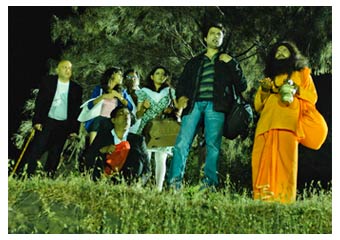
Ankush Choudhari, Ashach Eka BetawarDuring their first dinner itself, a recorded message accuses each one of them of the crimes committed by them. They all question the butler, asking him about the man behind the scene. When all of them are convinced that like them, even the Butler has been invited to serve them; they start suspecting each other. As the mystery remains, two of them are found murdered, one after the other, little before interval. Before that, the director takes time to narrate in brief the lifestyle of Mumbai through the voice of Nana Patekar, since all these people belong to Mumbai. He also takes you quickly into the flashback, showing the background of six of the guests, while they are travelling in an imported motor boat, on their way to the island.

At the stroke of interval, there are six guests left, besides the Butler and his wife. Aakash( Ankush Choudhary) and Ameeta (Madhura Velankar ) being treated as lead pair, come closer during this period; while the bar dancer Shabana( Sai Tamhankar) becomes the favourite of DD (Yatin karyekar). A doctor (Sanjay Mone) and a professional criminal ( Kamlesh Sawant) are looked upon as suspects, in this mysterious drama. As the screenplay progresses, you find at least two twists in the screenplay of this film; only to surprise you in the climax about the man behind the killings.

Chintan Mokashi’s screenplay possesses the required strength, to create the desired impact in this captivating murder mystery, which is new to Marathi cinema. His dialogues with Sanjay Pawar also create the combined effect of fear and humour, according to the changing situation. The character of Sanjay Narvekar has been cleverly used to nullify the continuous effect of terror. Director Sanju Hinge has done a brilliant job in generating anxiety after each murder sequence, for which he deserves compliments.

The background music and sound effects have been well paced in this film to generate curiosity at every stage, especially after interval. The film has only three songs composed by Milind Joshi, out of which two songs in Hindi are picturised on Shabana, during pre interval stage .The third one is played in the background, immediately after interval. Editing work by Kshitij Pavaskar and Abhijit Girulkar is good, compared to the Hindi version ‘Gumnam’ based on the adaptation of same play. The cinematography by Raju K.G. is very effective to create that desired impact, at every moment in the film.
Among the artistes, Ankush Choudhary, Madhura Velankar, Sai Tamhankar , Yatin karyekar, Sanjay Mone and Sanjay Narvekar find better scope to display their acting skills, at different situations. Kamlesh Sawant finds some scope in three scenes; but talented actors like Sharad Ponkshe and Mangesh Desai are treated like guest artistes in this film. The same is the case with Ponam Jadhav .

The plot in the film is gripping, though it has some resemblance to 1965 Bollywood film ‘Gumnam’; which is also inspired by Agatha Christie’s creation. The reason for the assembly of guests is different. By the way, the Bikini scene of Sai hasn’t been there in ‘Gumnam’, as the Bollywood actress Helen was shown in Mini skirt at the beach. One good thing is that, the makers of this film have admitted that they were inspired by Agatha Christie’s work. Now, how you give treatment to this subject in cinematic format, is all that important and makers of ‘Ashach Eka Betavar’ have succeeded in offering their best to Marathi film lovers. It’s a well presented murder mystery. Finally, what Agatha Christie had said, has a point here. “Every murderer is probably somebody’s old friend.”

‘Premachi Goshta’ defines love beyond relationship

Premachi Goshta
Rating: na
Banner: Mirah Entertainment Pvt. Ltd, Citrus Check Inns
Producers: Ihita enterprises
Director: Satish Rajwade
Music: Avinash, Vishwajeet
Cinematography: Suhas Gujrathi
Cast: Atul Kulkarni, Sulekha Talwalkar, Sagarika Ghatage, Satish Rajwade,
Rohini Hattangadi, Mira Velankar and Rani Gunaji (Guest Appearance)
Movie Review by: Ulhas Shirke

Steve Martin has rightly said, “Relationships end, but they don’t end your life. But people do often spend more time finding out about failed relationships than finding successful ones.” Perhaps, based on this philosophy, writer Chinmay Kelkar and director Satish Rajwade thought of making this new Marathi film ‘Premachi Goshta’. The rising cases of divorce among young middle class Maharashtrian people are on the rise and hence this subject is timely, to make a film.

The story of the film is about two strangers Ram Subramanyam ( Atul Kuklkarni), and Sonal ( Sagarika Ghatge), who happen to meet in a Family court. They start talking to each other after a misunderstanding and later get to know each other . For Ram, it is almost like understanding a woman, after meeting her in the family court.

Ram already has faced a divorce from Ragini( Sulekha Talwalkar) an aspiring model and stage actress, who is more concerned about her career and space. Though Ram is a good husband, Ragini’s over ambitious attitude, results in their divorce. On the other hand, Sonal has two failed marriages and is depressed. She lives with her single friend Meera( Meera Velankar) and desperately searches for a job. When Sonal faces an interview, to assist a script writer in his works, he happens to be Ram. In short, the world is too small for them, to meet once again.

Premachi Goshta

Ram is born to a Maharashtrian mother and a south Indian father, hence Subramayam. But, in the film, he is shown only with his mother ( Rohini Hattangadi), who is more concerned about her son’s future. But, Sonal’s entry into his office, brings lady luck to Ram. Otherwise, believing in stories based on remakes of old hits with little changes here and there; Ram is encouraged by Sonal to write his original stories and it works. Ram also inspires Sonal to contribute something to his story and later gives her a free hand to proceed with the conclusion.

As the characters in their story take the form of A,B,C & D; the actual happenings in their life also take unusual turns, with the return of Ragini and Samit ( Sonal’s ex- husband). This brings a temporary halt to their work on script, with the difference of opinion between Ram and Sonal over conclusion part in the climax. Ram’s close friend Swaraj ( Satish Rajwade) suggests him not to entertain Ragini once again, no matter it was for professional work. Ram’s mother is also not happy with Ram’s professional relations with Ragini, whom she calls a selfish woman.

Director Satish Rajwade has handled this cinematic form of love story with his own creativity. Scenes of Ram and Sonal together in office and Cafe have been shot very well. “Love remains, though relationship ends” is all that he has tried to explain, through this sensible film. After ‘Mumbai-Pune-Mumbai’ this is another good creation from him. Though ‘Mumbai –Pune-Mumbai’ was targeted at youngsters and about making selection of life partners, ‘Premachi Goshta’ goes one step further to show that falling in love with each other is not enough for marriage; but it is understanding each other well, more important for a successful marriage.

In the role of Ram, Atul Kulkarni has played a simple idealistic hero, in search of happy relationship. He has displayed different shades through his performance, while expressing his emotions and conscience. A wonderful actor that he is, Atul has given full justice to his character. Sagarika Ghatge, plays a depressed and agitated woman in the initial stage; but quickly shows happiness through her emotions, while sharing her thoughts with her friend Meera. Sulekha Talwalkar, who has a long experience of playing a career woman in the recent past, has played her part well. Satish Rajwade , Meera Velankar & Ajay Purkar have offered good support, through their performances in equally important characters in this film. It was nice to see Rohini Hattangadi making a comeback into Marathi films, after a long time.

Lyrics of Ashwini Shende are meaningful in the songs played in the background, according to changing situations; on the music of Avinash Vishwajeet. Photography by Suhas Gujarathi is good, while capturing those required emotions of the main characters, in all those important scenes. Presented by Mirah Entertainment Pvt Ltd, ‘Premachi Goshata’ is not a routine love story; but, offers something different, to define love beyond relationship.